

In an era where acquiring new customers costs several times more than retaining existing ones, a crucial tool that no business can afford to overlook is a Loyalty Program. Within this, the most powerful tool for driving repeat purchases is “Membership Tiers.”
If you are wondering how a tiered membership system can help your business grow and how to get started successfully, this article has the in-depth answers for you.
What are Membership Tiers?
Membership Tiers refer to the grouping or categorization of members based on their purchasing behavior or service usage. Customers in each tier receive different benefits, discounts, or rewards. The higher the tier a customer reaches, the more valuable and exclusive their privileges become.
Why do Membership Tiers Work Psychologically?
Human beings naturally compare themselves to others and desire a sense of exclusivity. Having Membership Tiers creates drive and motivation for customers to elevate their status to unlock better benefits. This results in continuous repeat purchase behavior without the brand having to aggressively push for sales.
4 Techniques for Successful Membership Tiers (To Realistically Boost Sales)
If you want your tiered membership system to operate at maximum efficiency, marketers and business owners should structure it based on these 4 principles:
1. Define Clear Conditions and Membership Tiers
The tier structure must not be complicated. Customers should immediately understand how to level up. Typically, programs are divided into 3 levels (Entry, Middle, High) using 2 main criteria:
- Measured by Accumulated Spending: For example, the first purchase grants Entry level, accumulating $300 grants Middle level, and accumulating $600 grants High level.
- Measured by Accumulated Scores: Points earned from scanning QRs or entering serial numbers. Each scan or serial number entry may yield different points depending on the product type and SKU. For instance, Product A (SKU 01) grants 10 points, while Product A (SKU 02) grants 20 points.
2. Design Distinct and Attractive Privileges
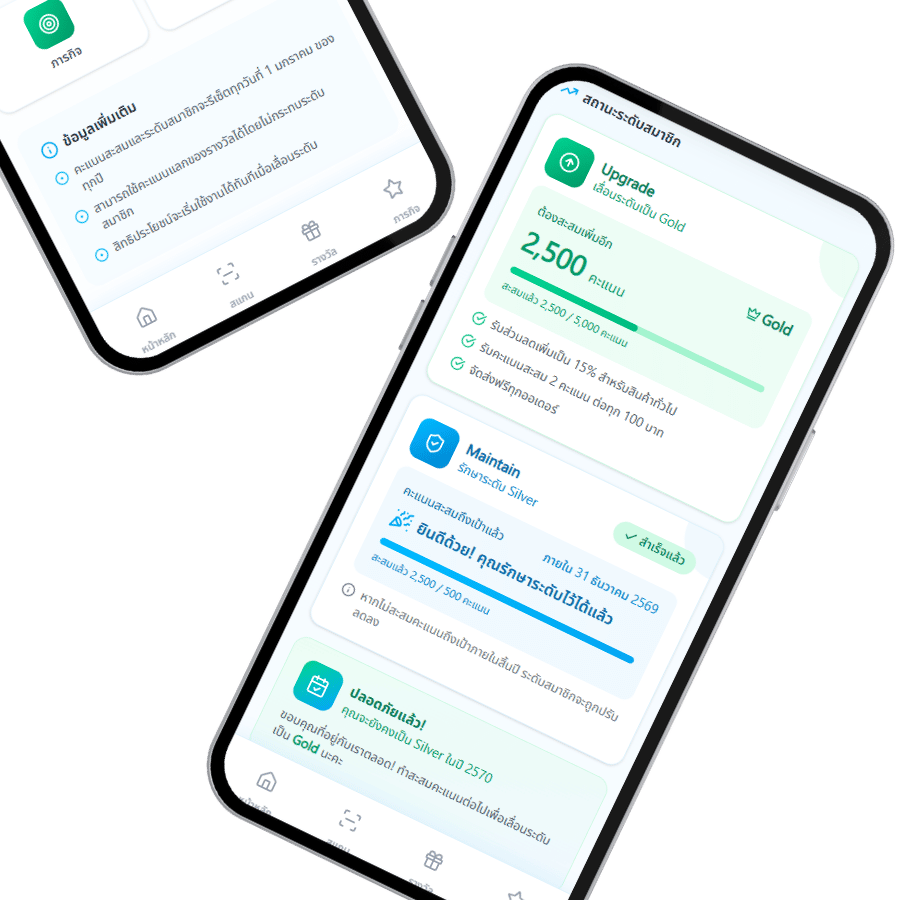
Points or discounts in each tier must offer visibly compounding value to motivate users to climb the ladder. For example:
- Entry Level:
- Reward Points: Earn 5 points for every 1 item purchased.
- Redemption Options: 5 standard products available for point redemption.
- Middle Level:
- Bonus Points/Discounts: Earn 7 points for every 1 item purchased + access to a 20% discount promotion.
- Redemption Options: 5 standard products + 5 premium products available for point redemption.
- Birthday Privileges: Receive $2\times$ points on purchases made during their birthday or birth month.
- High Level:
- Extra Bonus Points/Special Discounts: Earn 10 points for every 1 item purchased + access to a special 30% discount.
- Redemption Options: 5 standard products + 5 premium products + 5 exclusive products available for point redemption.
- Birthday Privileges: Receive $2\times$ points on purchases made during their birthday or birth month.
- Special Event Privileges: Exclusive rights to attend special events hosted by the brand owner.
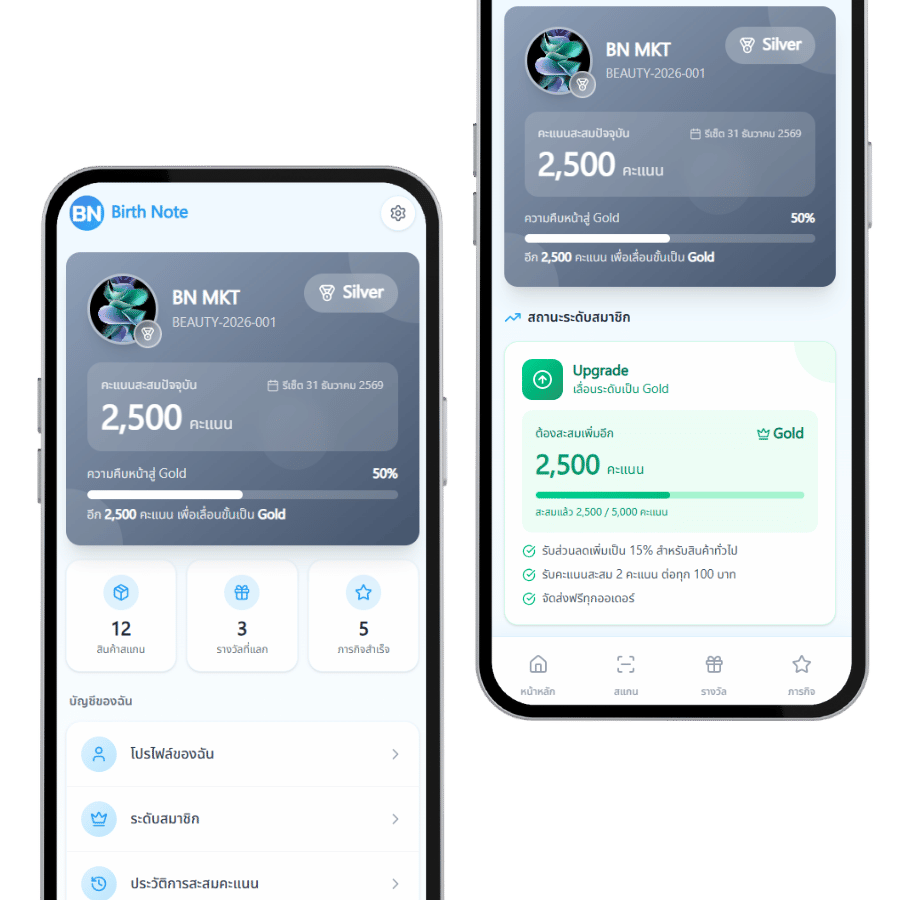
3. Adopt a Digital Member Card
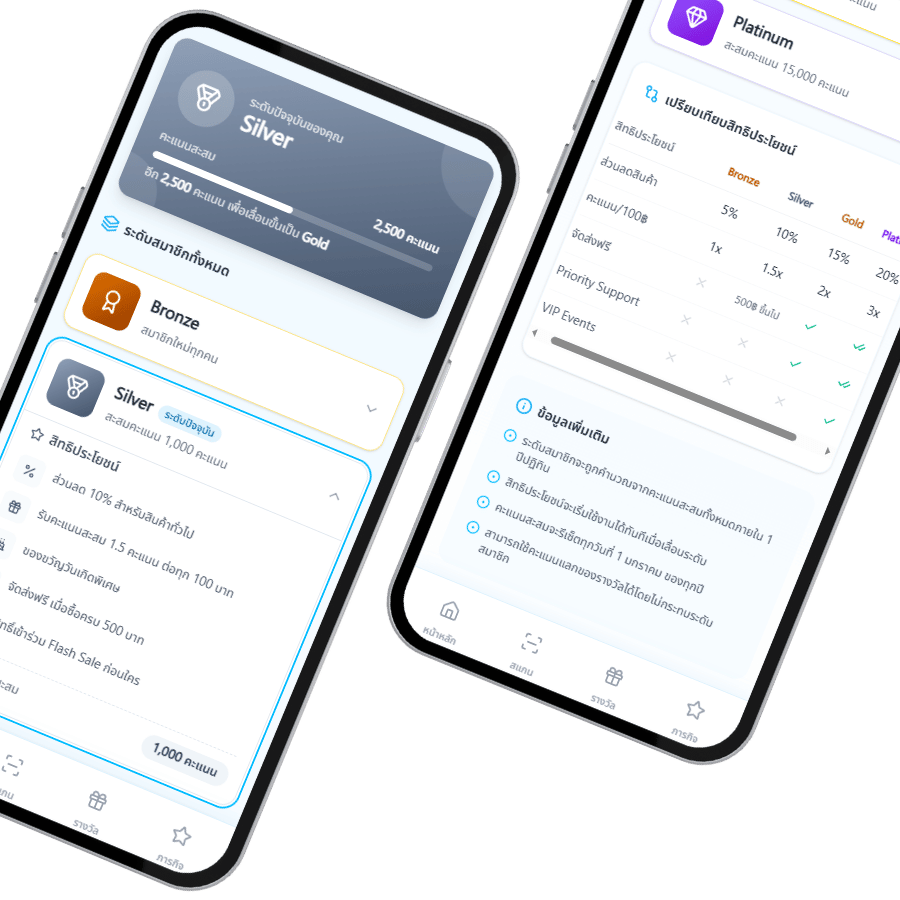
The era of carrying plastic or paper cards is over. Switching to a Digital Member Card helps because:
- Customers can easily check their tier status, accumulated points, and expiration dates via their smartphones.
- Brands save on card production costs and can edit information or update the system instantly in real-time.
- Stores can accurately collect and analyze customer behavior data.
4. Deliver Personalized Communication
Since each group receives different benefits, the delivery of information, promotions, or advertisement graphics should be clearly segmented by membership tier. This prevents confusion and creates a sense of exclusivity, making customers feel truly valued as VIPs.
4 Benefits of Membership Tiers That Businesses Can’t Ignore
Why do top global brands prioritize tiered membership systems? Here is why:
- Advanced Segmentation: It helps brands clearly understand the behavior of low-tier, mid-tier, and top-spending customers, enabling highly targeted personalized marketing.
- Gamification (Motivation to Buy): Climbing membership tiers feels like playing a game. Customers will try to spend more just to unlock the next level of benefits.
- Emotional Loyalty: Customers in higher tiers, such as Platinum or VIP, feel a sense of exclusivity and receive special care, fostering a genuine love for the brand.
- Retention Value (Retaining Quality Customers): Top spenders are the financial backbone of a business. Taking care of them with the right tier reduces the likelihood of them defecting to competitors.
Conclusion: Start Your Membership Tiers Today with the Right System
Implementing Membership Tiers is no longer difficult if you have an efficient membership management tool. For businesses looking to boost sales, retain existing customers, and hit sustainable revenue goals, Birth Note has developed a cutting-edge point accumulation and CRM system. It features unlimited membership tiering capabilities, allowing you to seamlessly customize the structure to perfectly fit your business model.
Transform Your Business with Birth Note Solutions
Get a free expert consultation for a tailored QR Code solution.
Call: 099-564-5947 | 096-142-9547 · Fast reply within 24 hours!
Frequently Asked Questions (FAQ) about Membership Tiers
Here is a collection of frequently asked questions regarding this topic.
📅 Last updated: